Challange
It affects people, water and wild animals...
This not just a distant problem...
Why should I care?
Rubber pollution
Although we are increasingly concerned about sustainability and the environment, tires are still found scattered along roadsides, in forests, and on the edges of cities. But do we really consider their future once they reach landfills, forest margins, or collection sites?
The invention and development of the tire revolutionized mobility and shaped our modern freedom to travel.
However, as the number of vehicles rapidly increased, the issue of tire waste was often overlooked. Today, the problem extends far beyond used tires themselves. Many products made from recycled tires — such as playground or sports surfaces — eventually face the same fate. Once they wear out, there is still no clear or sustainable solution for their disposal or reuse.
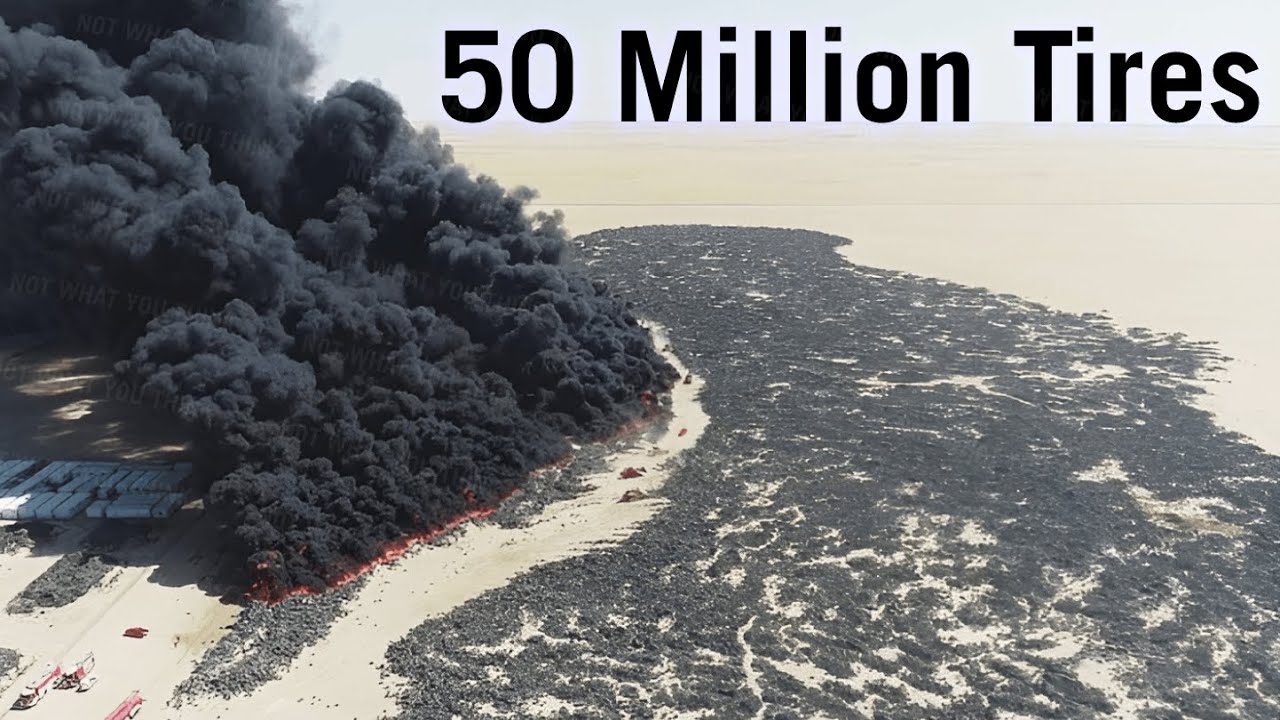


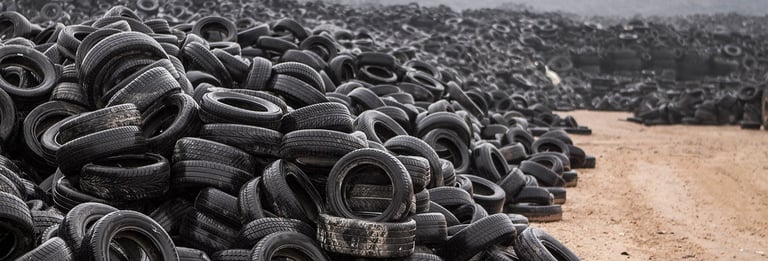


A single tire begins to degrade only after around 120 years, and the full decomposition process can take up to 500 years.
Every year, 1.5 billion tires become waste worldwide, and tire dust has been identified as one of the largest sources of microplastic pollution in the oceans.
Tire pollution is a long-term environmental challenge — one that requires collective awareness and action from all of us.
Predict the future
The invention and development of tires significantly influenced the freedom to travel, but with the rapid growth of vehicles, waste management was often neglected. Every year, 1.5 billion tires become waste worldwide, and by 2040 it is projected that there will be 2 billion cars and nearly 800 million trucks, highlighting environmental challenges related to exploitation and waste management.


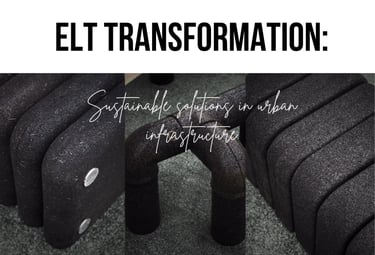
The ELT (End-of-Life Tire) study conducted during the research opened new opportunities to view tire waste not as a problem, but as an untapped resource. Applied technologies, scientific research, experimental studies, and innovative application methods made it possible to analyze the properties of different granule fractions and reveal their multifunctional potential in creating spatial, three-dimensional objects suited for small-scale architecture.
Context
ELT transformation
Zero-Heat, Zero-Waste
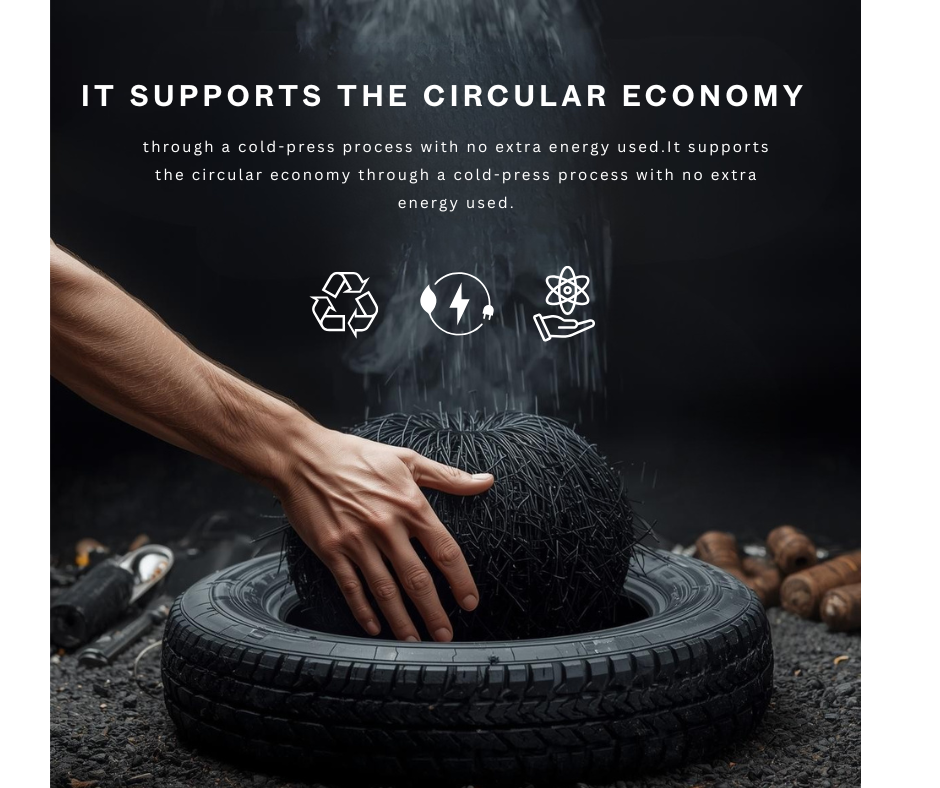
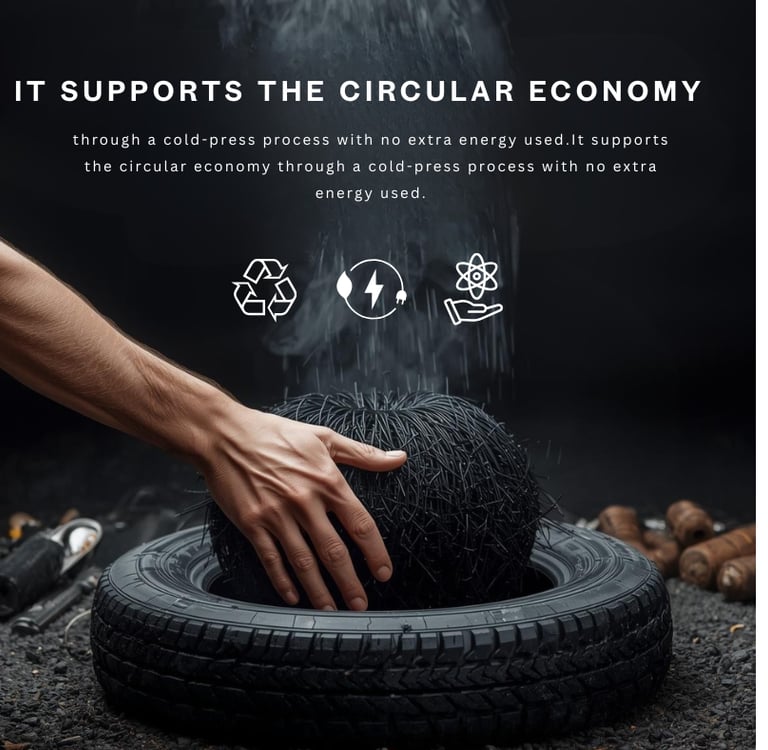
Re-TI products are created using a cold-pressing manufacturing process that requires no heating, melting, or energy-intensive machinery. The rubber is shaped without thermal treatment, relying only on human force or minimal mechanical assistance, which significantly reduces energy consumption throughout production. Using recycled binders instead of heat allows the material to be securely formed while remaining 100% recyclable. This low-impact process stands apart from conventional recycled rubber manufacturing, which typically depends on high temperatures and additional engineering energy. As a result, Re-TI objects can be recycled and re-formed repeatedly, maintaining material quality, eliminating waste, and strengthening a truly sustainable, circular economy.
Manufacturing
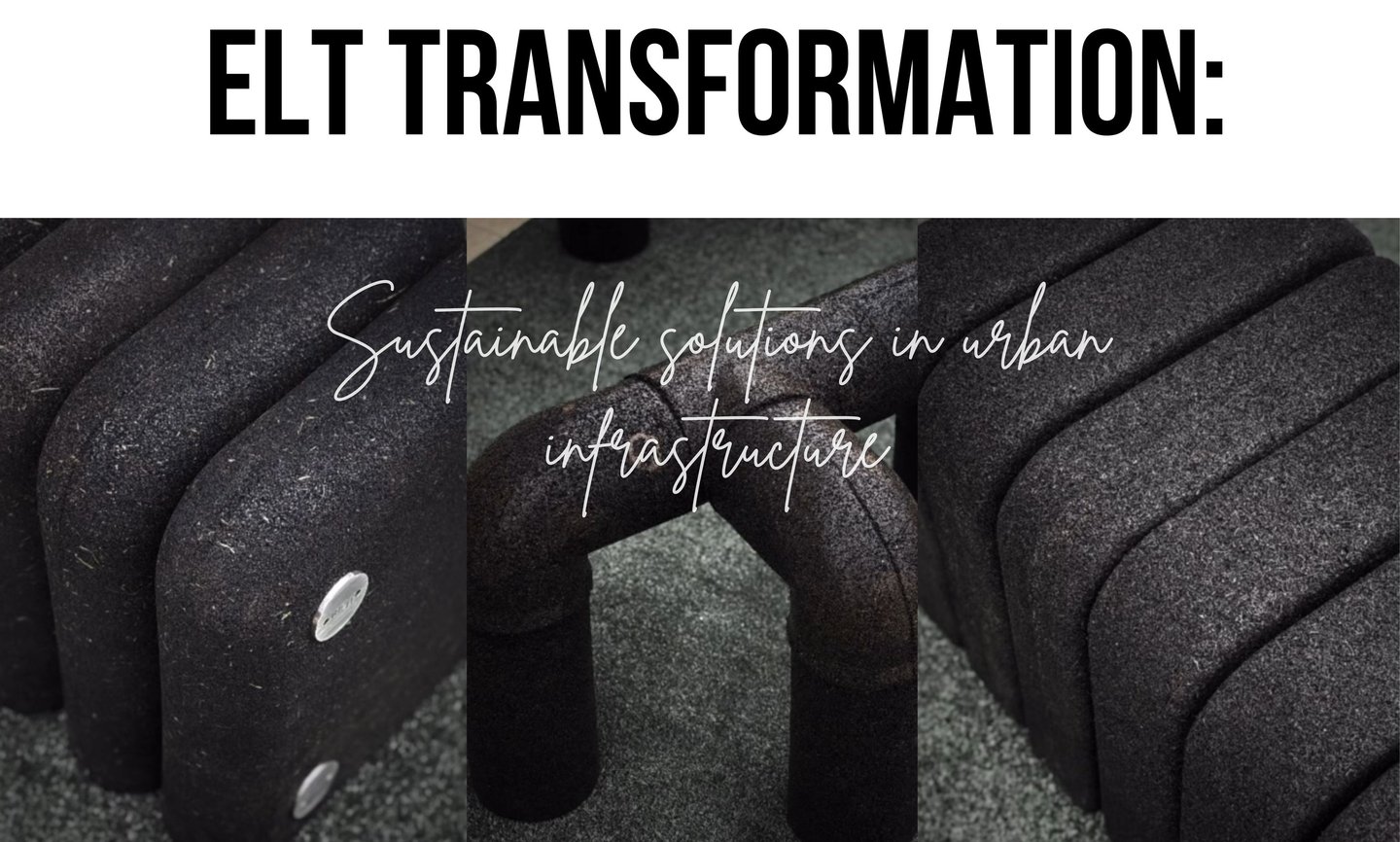
The "Re ti" collection consists of three objects: children’s playground equipment, road barriers, and benches for public spaces. These objects not only address an ecological problem but also create a new perspective – transforming waste into resources. The objects protect against terrorist attacks during events, contribute to spreading sustainability, encourage children’s creativity and curiosity, foster dialogue between city residents and visitors about sustainability, and shape a conscious attitude toward the future environment.
Outcome
Get in touch
+37061040885
info@re-ti.io